
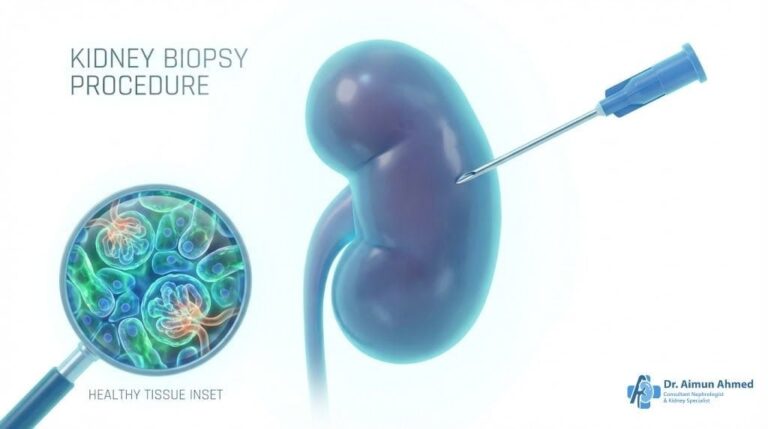

Are you facing unexplained symptoms like blood in your urine or fluctuating protein levels that standard tests can’t explain? The uncertainty of a potential kidney issue can be overwhelming, leaving you worried about what the future holds for your health. Through a kidney biopsy, Dr. Aimun Ahmed provides the precise diagnosis needed to guide your treatment and restore your peace of mind.

What is a Kidney Biopsy?
A kidney biopsy, often referred to in medical terms as a renal biopsy, is a diagnostic procedure where a doctor removes a small piece of kidney tissue for examination. While blood and urine tests give us a “snapshot” of how your kidneys are functioning, they often cannot tell us why a problem is occurring.
Think of it like a car engine. A warning light (blood test) tells you something is wrong, but a mechanic (nephrologist) needs to look inside the engine (biopsy) to identify the broken part. By examining the tissue samples under a powerful microscope, specialists can see inflammation, scarring, or immune system deposits that are invisible to the naked eye. This key nephrology procedure is the gold standard for diagnosing complex renal conditions, ensuring you receive the right treatment rather than a “best guess.”
Why Do Doctors Suggest a Kidney Biopsy?
You might be wondering why your doctor has recommended this specific test. Generally, a biopsy is not the first step. It is suggested when other diagnostic tools—like blood work or imaging—haven’t provided a clear answer.
The primary goal is to determine the specific cause of kidney dysfunction. For example, if you have rapid loss of kidney function or significant protein in your urine (proteinuria), a biopsy helps distinguish between conditions that look similar on the surface but require vastly different treatments.
Whether it is to check for rejection in a transplant kidney or to diagnose an autoimmune disease like lupus, the small tissue sample extracted provides a roadmap for your care.
Kidney Biopsy Indications and Complications
When Do You Need a Biopsy?
Doctors recommend a kidney biopsy when they need definitive answers about unexplained kidney problems. Common indications include:
- Unexplained Kidney Function Decline: When your blood tests show rising creatinine levels or falling filtration rates without an obvious cause, a biopsy can identify the underlying disease.
- Persistent Protein in Urine: Finding protein in urine (proteinuria) might signal glomerulonephritis or nephrotic syndrome. A biopsy determines which specific condition is causing the leak.
- Blood in Urine: When red blood cells appear in your urine alongside protein or declining kidney function, a biopsy helps distinguish between various types of kidney inflammation.
- Suspected Kidney Diseases: Conditions like lupus nephritis, IgA nephropathy, or rapidly progressive glomerulonephritis require biopsy confirmation before starting aggressive treatments.
- Transplant Monitoring: Patients with kidney transplants may need biopsies to check for rejection or other complications affecting the new kidney.
- Chronic Kidney Disease Evaluation: Sometimes doctors need to understand the exact type of damage causing chronic kidney disease to preserve remaining function and improve quality of life.
Potential Complications
While generally safe, kidney biopsies do carry some risks that patients should understand:
- Bleeding: The most common complication is bleeding from the biopsy site. Most patients experience minor bleeding that stops on its own, but approximately 1-2% develop significant bleeding requiring intervention.
- Pain: Some discomfort at the biopsy site is normal and usually resolves within a few days. Severe pain is uncommon but should be reported immediately.
- Arteriovenous Fistula: Rarely, the needle can create an abnormal connection between a kidney artery and vein. Most of these close on their own without treatment.
- Infection: Though uncommon with proper sterile technique, infection at the biopsy site or in the kidney itself can occur.
- Damage to Nearby Structures: The needle could inadvertently puncture adjacent organs, though imaging guidance makes this extremely rare.
Prof. Aimun Ahmed emphasizes that serious complications are uncommon when biopsies are performed by experienced nephrologists using modern imaging techniques. The benefits of accurate diagnosis typically far outweigh the minimal risks for most patients.
Steps of the Procedure: What Happens During a Kidney Biopsy
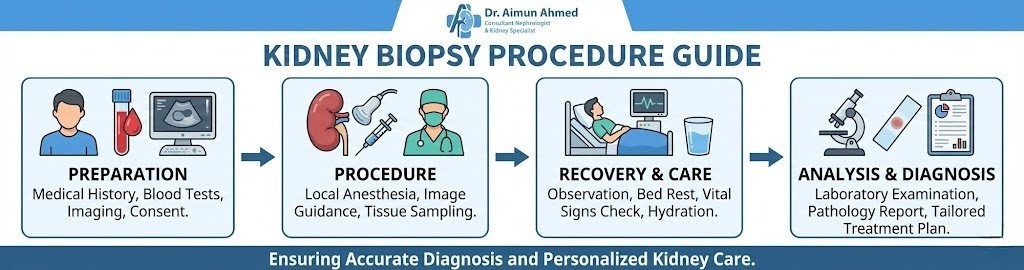
Many patients feel anxious about the “unknown.” Here is a breakdown of the steps of the procedure to help you know what to expect.
- Preparation and Positioning: You will likely be asked to lie on your stomach (prone position). If you have a transplanted kidney, you will lie on your back. A firm pillow may be placed under your abdomen to push the kidneys closer to the surface of your back.
- Imaging and Anesthesia: The doctor uses real-time ultrasound or CT scans for guiding the needle. This ensures the needle enters the safe zone of the kidney, avoiding large blood vessels. Local anesthesia is applied to numb the skin and the path to the kidney. You will feel a sting, then numbness.
- The Needle Procedure: Once the area is numb, the doctor inserts a thin biopsy needle. You may be asked to hold your breath for a few seconds. This prevents the kidney from moving as the needle advances.
- Sample Collection: The device clicks loudly as it removes the small tissue sample. This happens quickly. The doctor may repeat this 2-3 times to ensure enough tissue is extracted for a complete analysis.
- Post-Procedure Care: Pressure is applied to the biopsy site to stop any bleeding, and a bandage is applied.
Kidney Biopsy Risks
Dr. Ahmed believes in an open discussion about kidney biopsy risks to empower your decision-making. While the procedure is routine for an expert nephrologist, biology varies from person to person.
- Bleeding: The most common risk. You may see pink or red urine for a day or two. Internal bleeding around the kidney (hematoma) can occur but usually resolves without intervention.
- Pain: Soreness at the puncture site is normal.
- Infection: Rare, as the procedure is performed under sterile conditions.
- Arteriovenous Fistula: Rarely, the needle can damage the walls of an adjacent artery and vein, creating a connection. This typically heals on its own but may require monitoring.
To make the procedure safe, your medical team will check your blood clotting ability before the biopsy. If you take blood thinners, you will be guided on when to stop them.
Is Kidney Biopsy Painful?
The question “Is kidney biopsy painful?” is one of the most frequent concerns. The short answer is: it shouldn’t be painful, but it can be uncomfortable.
The local anesthetic effectively blocks sharp pain from the skin and muscle. However, the kidney itself doesn’t have pain receptors in the same way your skin does.
Most patients report feeling “pressure” or a “pushing” sensation rather than sharp pain during the needle procedure. After the anesthesia wears off, the lower back may feel like you have a deep bruise or a muscle ache. This is usually manageable with simple pain relief like paracetamol.
Kidney Biopsy Cost
For many patients seeking private care or navigating insurance, understanding the financial aspect is crucial. While we cannot provide specific numbers here due to varying hospital fees and insurance plans, we can discuss the factors that influence cost.
The final bill for a kidney biopsy typically includes:
- Professional Fees: The cost for the nephrologist performing the procedure.
- Facility Fees: The cost of using the hospital room, ultrasound equipment, and nursing care.
- Pathology Fees: The cost for the specialized laboratory analysis where the cells are examined.
Costs can vary significantly depending on whether the procedure is done as an inpatient (staying overnight) or outpatient case.
Kidney Biopsy Results: Understanding What They Mean
Getting your kidney biopsy results can feel overwhelming, but understanding the basic framework helps you have more productive conversations with your nephrologist.
The Pathology Report Structure:
Your biopsy results come as a detailed pathology report examining three main compartments of the kidney:
- Glomeruli: These tiny filters remove waste from blood. The report describes how many glomeruli were examined and what percentage show damage. Conditions like glomerulonephritis specifically affect these structures.
- Tubules and Interstitium: The tubules are tiny tubes that process filtered fluid into urine. The interstitium is the supporting tissue around them. Scarring or inflammation here indicates different disease processes than glomerular damage.
- Blood Vessels: The report notes any changes in kidney arteries and veins, which can indicate high blood pressure damage or other vascular conditions.
Common Diagnoses:
Your pathology report might identify conditions such as:
- IgA Nephropathy: Immune deposits in glomeruli causing inflammation
- Focal Segmental Glomerulosclerosis (FSGS): Scarring affecting some glomeruli
- Membranous Nephropathy: Thickening of glomerular membranes
- Lupus Nephritis: Kidney inflammation from lupus
- Diabetic Nephropathy: Damage from long-standing diabetes
- Acute Tubular Necrosis: Damage to tubules from various causes
Grading and Staging:
Many kidney diseases are graded by severity. The report might describe changes as mild, moderate, or severe, or use numerical staging systems. This information guides treatment intensity.
Chronic changes like scarring (fibrosis) tell your doctor whether damage is reversible or permanent. This distinction crucially affects treatment goals—either reversing active disease or preventing further decline.
Special Staining Techniques:
Beyond standard microscopy, your samples undergo special tests:
- Immunofluorescence: Detects immune system proteins and antibodies
- Electron Microscopy: Reveals ultra-fine structural details
- Special Stains: Highlight specific types of scarring or deposits
These techniques provide additional layers of diagnostic information that regular microscopy might miss.
Timeline for Results:
Standard results typically take 3-7 days. Complex cases requiring additional staining or expert consultation might take longer. Your nephrology team will schedule a follow-up appointment to discuss findings and treatment plans.
Prof. Ahmed emphasizes that kidney biopsy results should never be interpreted in isolation. They must be combined with your clinical history, blood tests, urine findings, and imaging studies to create a complete picture of your kidney health.
Kidney Biopsy for Proteinuria: When Protein in Urine Needs Investigation
Protein appearing in your urine—a condition called proteinuria—often triggers the need for kidney biopsy. Understanding this connection helps explain why your doctor might recommend this procedure.
Why Proteinuria Matters:
Healthy kidneys filter waste while keeping essential proteins in your bloodstream. When kidney filters become damaged, proteins leak into urine. The amount and type of protein leakage provides clues about the underlying problem.
Small amounts of protein (under 500mg per day) might come from many causes and don’t always need biopsy. However, persistent significant proteinuria—especially nephrotic syndrome levels (over 3.5g per day)—requires definitive diagnosis.
Indications for Biopsy in Proteinuria:
Your doctor might recommend kidney biopsy if you have:
- Heavy proteinuria without an obvious cause
- Proteinuria accompanied by declining kidney function
- Blood cells in urine along with protein
- Proteinuria with signs of nephrotic syndrome (swelling, low blood protein, high cholesterol)
- Proteinuria in conditions like lupus or vasculitis requiring treatment decisions
What the Biopsy Reveals:
Microscopic examination shows exactly which part of the kidney filter is damaged and how. Different patterns point to specific diagnoses:
Minimal Change Disease: Glomeruli look nearly normal under regular microscopy but show changes on electron microscopy. This usually responds well to treatment.
Membranous Nephropathy: Thickened glomerular membranes with immune deposits. Treatment depends on severity and risk of progression.
FSGS: Scarring in segments of some glomeruli. This diagnosis has important implications for treatment and prognosis.
Diabetic Nephropathy: Specific structural changes in glomeruli characteristic of long-standing diabetes.
Amyloidosis: Abnormal protein deposits that can affect kidneys and other organs.
Treatment Implications:
The biopsy diagnosis directly determines treatment. Minimal change disease typically needs steroids. Membranous nephropathy might require immune-suppressing medications. FSGS treatment varies based on the specific subtype identified.
Without biopsy, your doctor would be prescribing powerful medications with significant side effects based on guesswork. The tissue sample ensures you receive the right treatment for your specific condition.
Prognosis Information:
Beyond diagnosis, the biopsy shows how much permanent scarring exists. This information helps predict whether your kidney function will improve with treatment or if the goal is preventing further decline.
Prof. Ahmed notes that patients often feel anxious about proteinuria, but remember that many causes are treatable when diagnosed correctly. The biopsy provides the roadmap for preserving your kidney function and preventing progression to kidney failure.
Kidney Biopsy Time: Scheduling, Duration, and Recovery Timeline
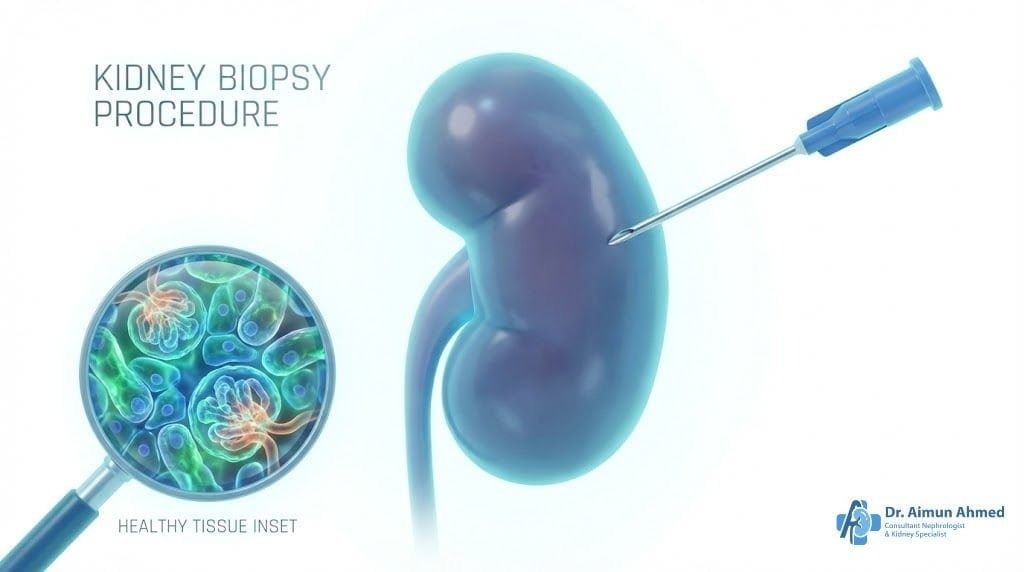
Understanding the time commitment for kidney biopsy helps you plan appropriately for the procedure and recovery period.
Scheduling Your Biopsy:
Once your nephrologist recommends biopsy, scheduling typically happens within 1-2 weeks, though urgent cases may proceed faster. This window allows time for:
- Stopping blood thinners if necessary
- Pre-procedure blood tests
- Arranging transportation home
- Planning time off work
Some centers perform outpatient biopsies while others require overnight observation. The approach depends on your specific situation and local protocols.
The Day of the Procedure:
Plan to spend 6-8 hours at the hospital or clinic for an outpatient biopsy. Here’s the typical timeline:
- Arrival and Preparation (1 hour): Registration, changing into a gown, IV placement, vital signs, and final discussions with your doctor.
- Pre-Procedure Imaging (15-30 minutes): Ultrasound or CT scanning to plan the needle path.
- The Procedure Itself (20-45 minutes): Including positioning, local anesthetic, obtaining samples, and applying pressure to the site.
- Immediate Observation (4-6 hours): Lying flat with frequent monitoring of blood pressure, pulse, and urine.
- Discharge Planning (30 minutes): Final checks, instructions, and arranging follow-up.
Recovery at Home:
The first 24 hours require rest and observation. Avoid heavy lifting, strenuous exercise, or activities that raise blood pressure significantly. Most patients feel tired and prefer staying home.
By day 2-3, many people feel well enough to return to light activities. Avoid vigorous exercise, heavy lifting, or contact sports for at least a week.
Full recovery typically takes 7-10 days, though this varies individually. Listen to your body—if you feel pain or unusual fatigue, slow down and rest more.
Return to Normal Activities:
- Light office work: 1-3 days
- Driving: 2-3 days if not taking strong pain medications
- Moderate exercise: 1 week
- Heavy lifting or contact sports: 2 weeks
- Swimming: 2 weeks (to ensure the puncture site is fully healed)
Results Timeline:
Preliminary results often arrive within 3-5 days, with complete analysis including special stains taking up to 7-10 days. Complex cases requiring expert consultation might take longer.
Your nephrology team will schedule a follow-up appointment to discuss results and treatment plans, usually within 1-2 weeks after the procedure.
Prof. Ahmed advises patients to plan for adequate recovery time rather than rushing back to normal activities. Proper rest reduces complication risk and supports healing.
Abnormal Kidney Biopsy Results: Next Steps and Treatment Options
Receiving abnormal kidney biopsy results understandably causes concern, but remember that diagnosis is the first step toward effective treatment and preserving kidney function.
Understanding “Abnormal”:
Abnormal results mean the pathologist found changes in your kidney tissue indicating disease or damage. The specific abnormalities determine your diagnosis, prognosis, and treatment approach.
Categories of Abnormal Findings:
- Active Inflammation: Immune cells infiltrating kidney tissue indicate ongoing disease that treatments can potentially reverse. Conditions like glomerulonephritis often show active inflammation.
- Scarring and Fibrosis: Permanent damage where healthy kidney tissue has been replaced by scar tissue. These changes are irreversible, but treatment can prevent additional scarring.
- Immune Deposits: Antibodies or immune proteins accumulating in kidney structures, seen in conditions like lupus nephritis or IgA nephropathy.
- Structural Abnormalities: Changes in kidney architecture indicating specific disease processes like diabetic nephropathy or polycystic kidney disease.
Treatment Approaches Based on Results:
Your specific diagnosis determines treatment:
- Immunosuppressive Therapy: Conditions involving immune system attacks on kidneys—like lupus nephritis or ANCA vasculitis—require medications that calm immune responses. These might include steroids, cyclophosphamide, or newer targeted therapies.
- Supportive Care: Some conditions lack specific treatments but respond to blood pressure control, proteinuria reduction with medications like ACE inhibitors, and lifestyle modifications.
- Disease-Specific Treatments: Certain diagnoses have targeted therapies. For example, complement inhibitors for specific types of glomerulonephritis or plasma exchange for certain rapidly progressive conditions.
- Conservative Management: When biopsy shows extensive irreversible scarring, treatment focuses on slowing progression, managing symptoms, and preparing for eventual dialysis or transplantation if needed.
Monitoring and Follow-Up:
Abnormal results require ongoing monitoring including:
- Regular blood tests checking kidney function
- Urine tests measuring protein and blood
- Blood pressure monitoring
- Periodic imaging studies
- Sometimes repeat biopsies to assess treatment response
Prognosis Factors:
Several elements influence outlook:
- Type of Disease: Some conditions respond better to treatment than others
- Degree of Scarring: More chronic damage indicates less potential for function recovery
- Timeliness of Treatment: Earlier diagnosis and treatment generally improve outcomes
- Individual Response: Patient-specific factors like age, overall health, and medication tolerance
Second Opinions:
For complex or rare diagnoses, seeking a second opinion from a specialist nephropathologist can provide additional clarity. Prof. Ahmed encourages patients to ask questions and fully understand their diagnosis before starting treatment.
Emotional Support:
Learning you have kidney disease affects more than just physical health. Connecting with support groups, counseling services, or other patients with similar conditions can help you navigate the emotional aspects of diagnosis.
The key message: abnormal results provide crucial information enabling targeted treatment. Many kidney diseases are manageable with proper care, allowing patients to maintain good quality of life for years or even decades.
Kidney Biopsy Patient Experiences
Patient experiences vary, but many express relief after the procedure is over. “It was the anticipation that was worse than the actual needle,” is a common sentiment. Patients often appreciate the clarity the results bring. Knowing exactly what is wrong—whether it’s a manageable condition or something requiring aggressive therapy—empowers them to take control of their health.
Dr. Ahmed’s patients frequently cite his calm demeanor and clear explanations as key factors in reducing their anxiety. Feeling “heard” and “safe” transforms a scary medical test into a manageable step toward recovery.
Frequently Asked Questions
How serious is a kidney biopsy?
While it is an invasive procedure, it is considered safe when performed by an expert like Dr. Aimun Ahmed. The risk of serious complications is low (less than 1%), making it a standard tool in modern nephrology.
What are the indications for a renal biopsy?
Common indications include unexplained blood in the urine (hematuria), high levels of protein in the urine (proteinuria), sudden loss of kidney function (acute kidney injury), or to assess a transplanted kidney for rejection.
How long does it take to recover from a kidney biopsy?
You will spend 4–6 hours recovering in the hospital. Full recovery at home takes about 1–2 weeks, during which you must avoid heavy lifting. Most people feel back to normal within a few days.
What diseases can a biopsy show?
It can diagnose IgA nephropathy, Lupus nephritis, Membranous nephropathy, Diabetic kidney disease, Amyloidosis, and various forms of vasculitis.
Why do doctors suggest a kidney biopsy?
Doctors suggest it because it is the only way to get a definitive diagnosis for many renal diseases. It helps them decide on the best treatments to preserve kidney function and improve your quality of life.
What are the three warning signs of kidney disease?
- Swelling in the ankles, feet, or around the eyes (edema).
- Changes in urination frequency or appearance (foamy or bloody urine).
- Persistent fatigue and difficulty concentrating.
Are there alternatives to a kidney biopsy?
Blood and urine tests give clues, but they are not true alternatives for diagnosing the tissue pathology. In some cases, genetic testing or advanced clinical imaging might provide enough information to skip a biopsy, but for many conditions, the biopsy remains essential.
Would you like to schedule a consultation with Dr. Aimun Ahmed to discuss your kidney health or get a second opinion on a recommended biopsy?